
The Monticello Opera House stands as a
grand monument to the Gilded Age and a vibrant hub for the modern arts. This
historic landmark has evolved from a multipurpose commercial hub into one of the
most beloved performing arts venues in the Southeast.
The structure, officially known as the Perkins Block, was built in 1890 by local
businessman John H. Perkins. Designed with a utilitarian ground floor for
general stores and a lavish theater on the second level, it was intended to
bring big-city culture to rural North Florida. The building is a stunning
example of Romanesque Revival architecture, featuring distinctive brickwork with
arched windows that define the 19th-century aesthetic.
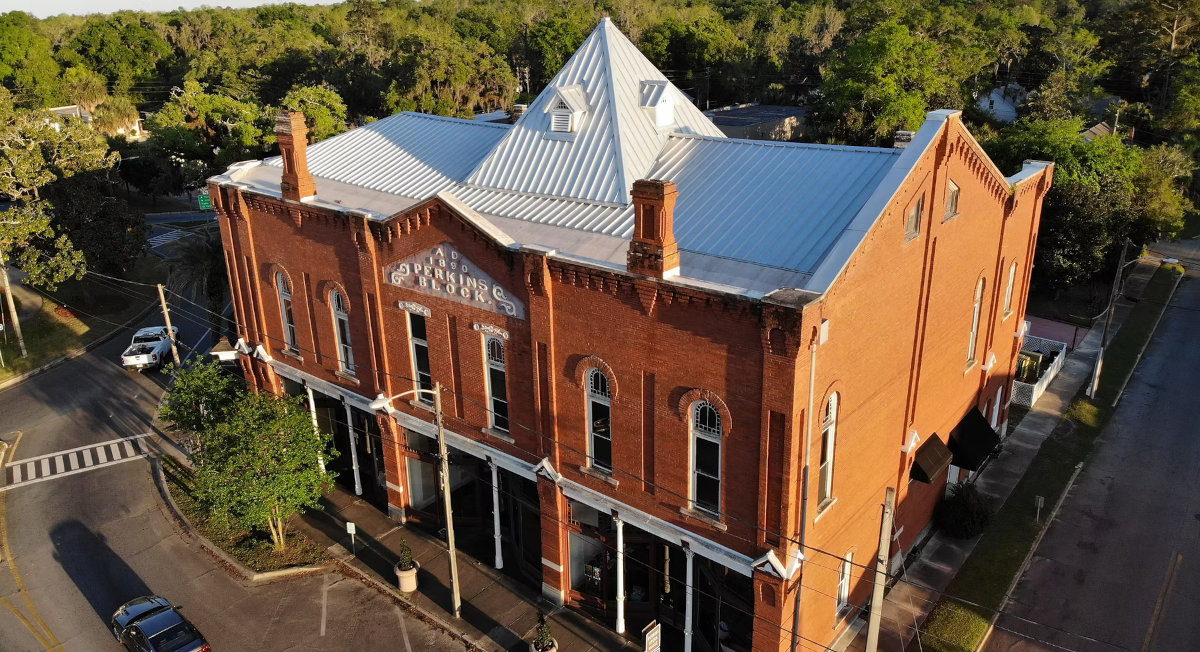
The large second floor theater, with its original heart-pine flooring and high
ceilings has exceptional acoustics. It has one of the few remaining "raked"
stages (slanted toward the audience) in the region, offering a classic
theatrical perspective.
Like many historic structures, the Opera House faced a period of neglect during
the mid-20th century. By the 1960s, the building was in a state of disrepair and
faced the threat of demolition. However, the local community rallied to form
Monticello Opera House, Inc., a nonprofit dedicated to its restoration. Through
decades of fundraising and meticulous preservation work, the venue was returned
to its former glory. Today, it is listed on the National Register of Historic
Places, serving as a testament to the power of grassroots historic preservation.
Today, the Monticello Opera House is far from a museum piece. It hosts a robust
annual calendar that keeps the spirit of the 1890s alive while embracing
contemporary entertainment. Visitors can experience professional and amateur
productions ranging from Shakespeare to modern musicals. The venue is also used
for live acoustic sessions, jazz performances, and bluegrass music that take
full advantage of the hall’s legendary acoustics. It also hosts banquets,
weddings and galas.
Activities & Facilities
Live music