Aripeka is a small coastal hamlet that feels frozen in time. It sits on the Gulf
coast directly on the boundary separating Pasco and Hernando counties. This unique
geographic placement splits the community into two administrative halves, connected
by a small bridge that spans South Hammock Creek.
Settlement in the area began around 1873 under the name Gulf Key. Early residents
relied on farming, fishing, and timber harvesting along the coastal waterways. In
the late 19th century, the local post office underwent several name changes—from
Gulf Key to Argo, before officially taking the name Aripeka in 1895.The name is
said to honor a prominent Mikasuki Seminole Chief and medicine man who led resistance
efforts during the Second Seminole War in the 1830s.
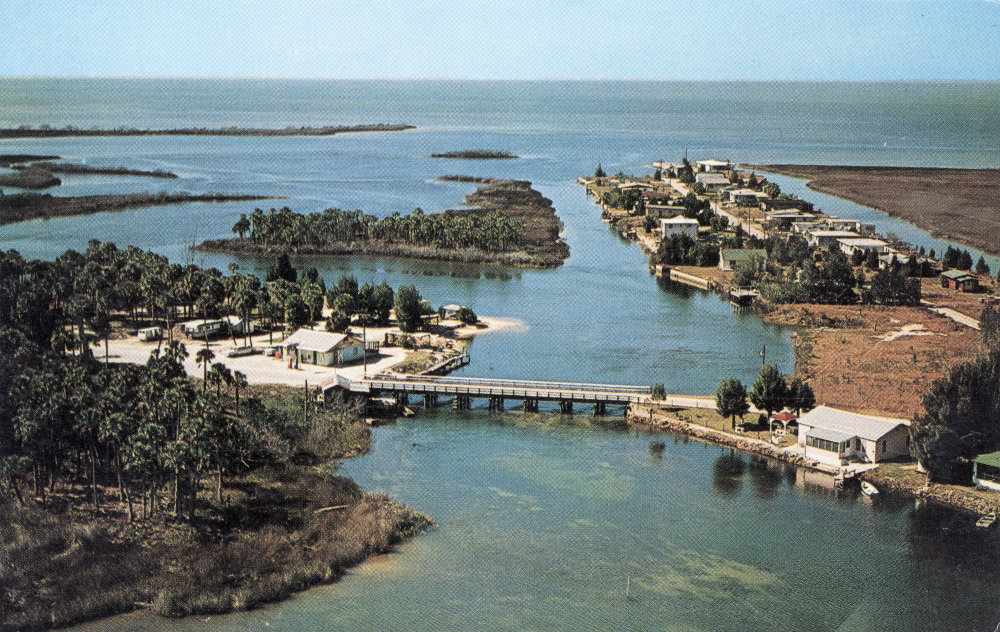
When Pasco County separated from Hernando County
in 1887, the county line cut through the village, creating a unique split identity
where residents on either side of the creek fell under different county jurisdictions.
Even today, children in the town may attend either Pasco or Hernando County schools
- depending on which side of the bridge they live on.
Aripeka's geography defines its tranquil character. Built around a network of
tidal inlets, islands, and marshlands, the town offers direct access to the Gulf
of Mexico. Hammock Creek snakes through the heart of the community, creating a haven
for kayaking, shallow-water boating, and coastal fishing.The surrounding environment
consists of lush salt marshes, coastal mangroves, and pristine pine flatwoods. Nearby,
the Aripeka Sandhills Preserve protects thousands of acres of sensitive ecological
habitat.
Because the coastal waters are shallow and dominated by seagrass beds, Aripeka remains
immune to large-scale commercial port developments, preserving its raw natural state.
Unlike many modern coastal Florida towns filled with high-rise condominiums or sprawling
resorts, Aripeka maintains an authentic "Old Florida" fishing village
atmosphere, with about the same modest population it has had for the past 100 years.
Throughout the 20th century, Aripeka’s quiet charm
attracted notable figures seeking solitude. Baseball legend Babe Ruth famously visited
the area for fishing trips during Yankees spring training. In later decades, Aripeka
developed a reputation as a quiet sanctuary for artists. Internationally acclaimed
Pop Art master James Rosenquist established a studio and home in Aripeka in the
1970s, drawing inspiration from the dramatic coastal skies, marsh lighting, and
isolated surroundings. Sadly, Rosenquist's home and studio were destroyed by
fire in 2009, along with many of his valuable paintings.
If you're planning a day-trip to Aripeka, be sure to visit the Aripeka Library
and Historical Museum on Rosemary Road. It occupies a building originally founded
as a first aid station by Dr. George Loewenstein in 1959. You can also still see
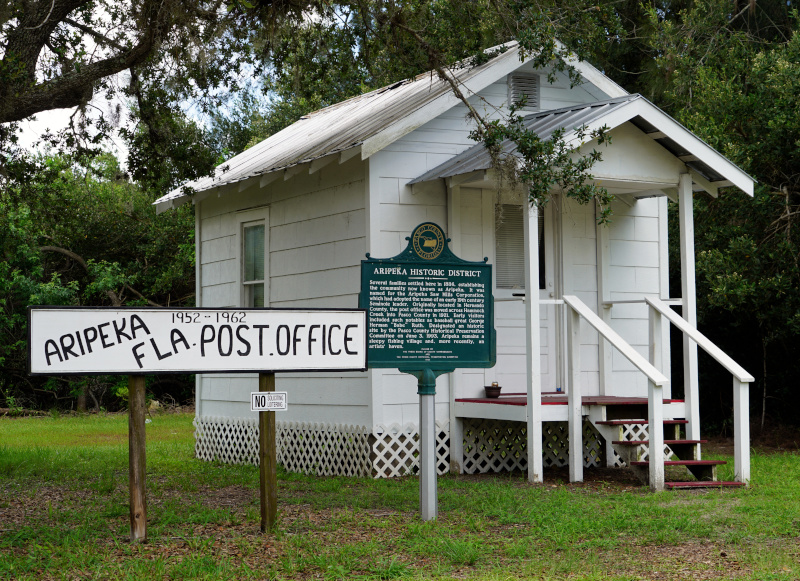
an original Aripeka Post Office dating from 1952 along C.R. 595 just south of the
bridges. Another must see on any Aripeka visit is Norfleet's Fish Camp and general
store at the bridge - established by Vern Norfleet in the 1940s, and still operated
as a family business.
Today, Aripeka remains a serene coastal haven cherished by long-time fishing families,
artists, and nature enthusiasts. Life here revolves around simple coastal pleasures:
tracking the tides, gathering fresh seafood, watching sunsets over the Gulf horizon,
and appreciating the quiet rhythm of Florida's Nature Coast.
Activities & Facilities
Dogs allowed

Short hiking trails
Paved bike trails
Open gulf kayaking
River or lake kayaking
Motor boating
Fishing