St. Marks Lighthouse
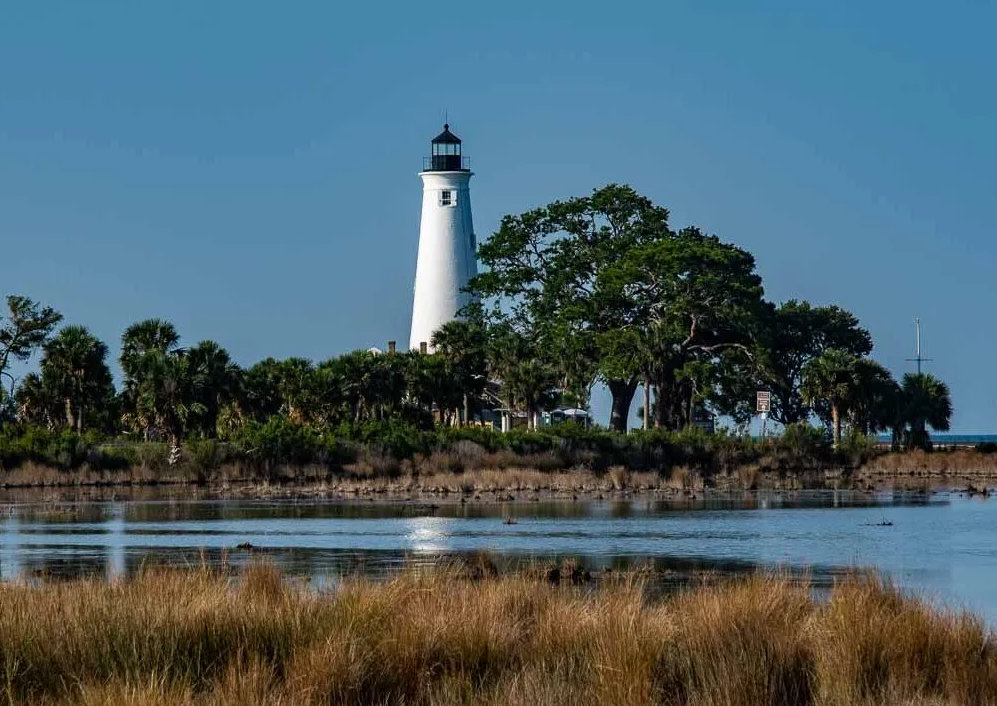
The St. Mark's Lighthouse is a
historic landmark located at the mouth of the St. Marks River within the 68,000
acre St. Marks National Wildlife Refuge. As the second oldest lighthouse in
Florida and the oldest on the Gulf Coast, it serves as a stunning focal point
for a landscape defined by wild shorelines and abundant wildlife.
First established in 1831, the lighthouse has survived over 100 hurricanes and
played a pivotal role during the Civil War. The current tower, completed in
1842, features walls that are four feet thick at the base and sits on a 12-foot
thick limestone foundation. During the Civil War, Confederate soldiers removed
the lighthouse's lens and hid it in the salt marsh to prevent Union ships from
using it for navigation. Despite attempts to blow it up, the tower survived.
The light was automated in 1960. While its historic fourth order fresnel lens
was removed for preservation in 2014, it remains an active aid to navigation
using a modern solar-powered beacon.
The lighthouse is situated at the end of a scenic 7-mile drive through the St.
Marks National Wildlife Refuge. While the grounds are open daily, the interior
of the tower is generally closed to climbing for safety reasons. The recently
restored keepers' quarters are typically open for tours on Fridays, Saturdays,
and Sundays. Entry requires that you pay a fee to enter the wildlife refuge.
Check the link below for exact times and fees.
The drive to the lighthouse is a premier spot for seeing alligators, bald
eagles, and migratory birds. In October, the area is famous for the arrival of
thousands of migrating monarch butterflies. The lighthouse is one of the most
photographed landmarks in the region, with the best shots often captured at
sunrise when the light reflects off the surrounding marshes and tidal pools. The
area features several short trails, including the Lighthouse Levee Trail, and a
saltwater boat ramp for those wanting to view the tower from the water.
Activities & Facilities
Museum or Visitor Center

Picnic shelter
Short hiking trails